Our Picks at a Glance
ClickMagick is the best ad tracking software for most advertisers: affiliates, funnel owners, Shopify stores and small agencies. RedTrack is the pick for media buyers managing many campaigns, and Hyros for brands with large ad budgets that want a guided setup.
| Tool | Best for | Starting price | Free option |
|---|---|---|---|
| ClickMagick | Most advertisers | $79/mo ($66 annually) | 14-day trial |
| RedTrack | Media buyers | $118/mo | 14-day trial |
| Hyros | Large ad budgets | Revenue-based | Demo |
| Voluum | High-volume affiliate traffic | $119/mo billed annually | 14-day preview |
| AnyTrack | Starting free | $100/mo | Free plan |
| Triple Whale | Shopify brands | Based on GMV | Free plan |
| Cometly | CRM-connected attribution | Quoted | Demo |
| Improvely | Small budgets | $29/mo | 14-day trial |
| BeMob | Budget campaign tracking | $49/mo | Free plan |
What Good Ad Tracking Software Does
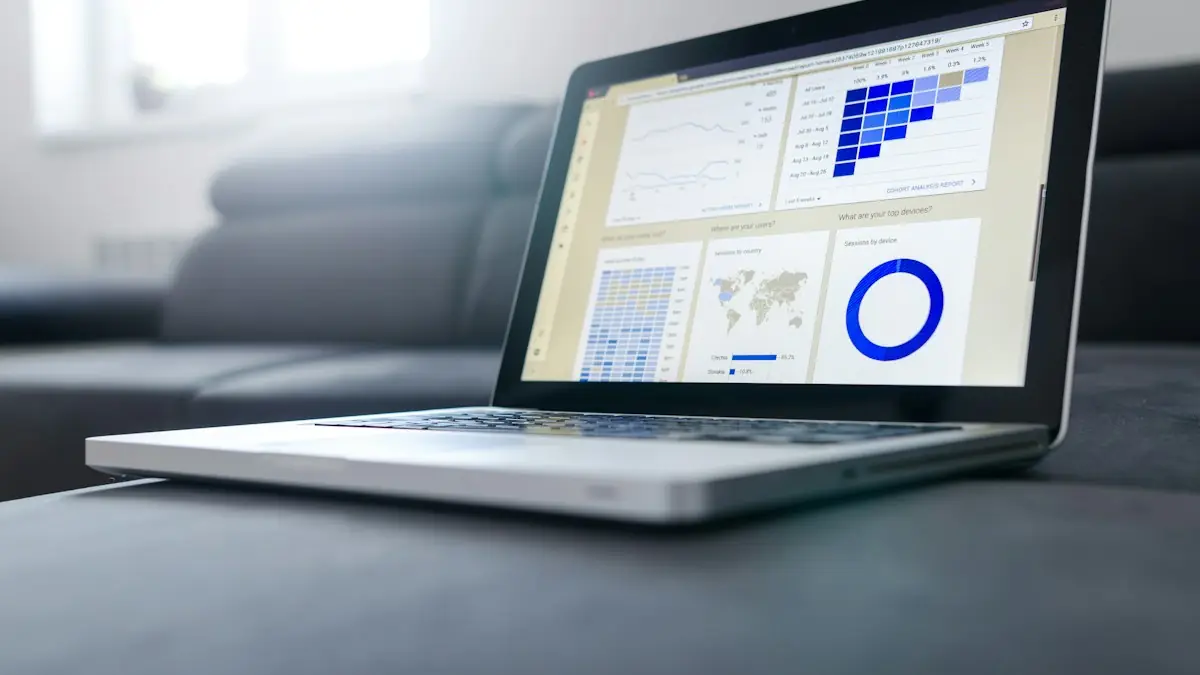
Every ad platform grades its own homework. Meta reports on Meta ads, Google on Google ads, each with its own attribution window, and their pixels miss sales to iOS privacy settings and ad blockers. Ad tracking software gives you a single, independent record.
The best tools do four things: record every click with its source, follow the buyer to the sale across devices, filter out junk clicks, and send real conversions back so the platforms' algorithms optimize on actual results. Our guide to ad attribution explains why this matters.
1. ClickMagick: Best for Most Advertisers
ClickMagick combines first-party tracking on your own domain, automatic cross-device attribution, five attribution models, bot filtering and Click Shield, and real-time conversion syncing with Meta, Google, TikTok and Microsoft. It works with Shopify, WooCommerce, ClickFunnels, GoHighLevel, Kajabi and custom sites.
Why We Rank It First
- Covers attribution, fraud protection and conversion syncing in one tool
- Flat, published pricing that doesn't rise with ad spend
- Fast self-serve setup with a 14-day trial
- Strong affiliate tools as well as funnel and store tracking
Keep in Mind
- Big jump from Starter ($79) to Standard ($199)
- Fewer campaign automation rules than RedTrack
- No deep ecommerce profit dashboards
Plans: Starter $79 a month for 10,000 visitors, Standard $199 for 100,000, Pro $349 for 1,000,000, with about two months free on annual billing. Read our full ClickMagick review.
Try ClickMagick Free2. RedTrack: Best for Media Buyers
RedTrack is built for teams running paid traffic to many offers across many sources. It says it syncs costs every 5 to 30 minutes and can run rules inside your ad accounts. Affiliate and lead-gen plans start at $118 a month for 5 million events, with separate ecommerce plans including a free single-store tier. More setup than ClickMagick, but more control at scale. See ClickMagick vs RedTrack.
3. Hyros: Best for Large Ad Budgets
Hyros focuses on attribution for long, high-ticket journeys and is popular with big info-product and coaching brands. Pricing scales with tracked revenue and onboarding is demo-led; third-party summaries put the entry business tier around $230 a month billed annually. It makes most sense when your ad budget dwarfs the tool's cost. See ClickMagick vs Hyros.
4. Voluum: Best for High-Volume Affiliate Traffic
Voluum is a long-standing tracker for affiliates buying native, push and pop traffic. Plans are billed annually from $119 a month for 1 million events, with a 14-day preview. Great for full-time media buyers; less relevant if most of your spend is on Meta or Google. See ClickMagick vs Voluum.
5. AnyTrack: Best Free Starting Point
AnyTrack offers tag-based tracking with automatic affiliate link tagging and conversion syncing. Its free plan covers 5,000 sessions on one site; paid plans start at $100 a month for 100,000 sessions. A good fit for affiliate content sites. See ClickMagick vs AnyTrack.
6. Triple Whale: Best for Shopify Brands
Triple Whale is an ecommerce analytics suite with its own pixel, profit dashboards and an AI assistant. There's a free plan, and paid packages are priced by annual GMV on 12-month subscriptions. Choose it for store analytics; choose ClickMagick for flat-priced ad attribution. See ClickMagick vs Triple Whale.
7. Cometly: Best for CRM-Connected Attribution
Cometly connects ad clicks and CRM data to revenue and sends detailed conversion data to ad platforms. Pricing is quoted after a demo, based on pageviews. Worth a look for teams whose sales close in a CRM pipeline. See ClickMagick vs Cometly.
8. Improvely: Best for Small Budgets

Improvely tracks visits and conversions with click-fraud monitoring from $29 a month for 10,000 visits. It's lighter on conversion syncing and attribution depth, but affordable. See ClickMagick vs Improvely.
9. BeMob: Best Budget Campaign Tracker
BeMob offers a free plan for 100,000 events and a $49 Professional plan for 1 million events. Data retention is short, one month on those plans, which limits long-term analysis.
Feature Comparison
Feature lists blur together quickly, so here's how the leading tools compare on the capabilities that most affect ad decisions. "Focus" means a headline capability; "Limited" means it exists but isn't central.
| Tool | Conversion syncing to ad platforms | Bot and click-fraud protection | Cross-device attribution | Campaign automation | Pricing model |
|---|---|---|---|---|---|
| ClickMagick | Focus | Focus | Focus | Limited | Flat, by visitors |
| RedTrack | Focus | Limited | Yes | Focus | By events |
| Hyros | Focus | Limited | Focus | Limited | By revenue |
| Voluum | Yes | Focus | Limited | Focus | By events, annual |
| AnyTrack | Focus | Limited | Yes | Limited | By sessions |
| Triple Whale | Yes | Limited | Yes | On higher plans | By store GMV |
The pattern is clear. Media-buyer tools lead on automation, revenue-priced platforms lead on guided attribution, and ClickMagick leads on the combination most advertisers actually need: accurate attribution, clean traffic and better data for the ad platforms, at a predictable price.
Mistakes to Avoid When Choosing
- Buying for features you won't use. Campaign automation is powerful for full-time buyers and dead weight for a store owner running two Meta campaigns.
- Ignoring the pricing model. Revenue- and GMV-based pricing rises as you succeed. Visitor- or event-based pricing rises with traffic. Pick the one that stays predictable for your business.
- Letting two tools send the same conversion. Choose one source for each ad platform, or you'll inflate its numbers.
- Skipping the trial comparison. Run any new tracker next to your current setup for two weeks and check both against real sales.
How We Ranked These Tools

We weighed each tool on what matters to an advertiser deciding where to spend: attribution accuracy across channels and devices, protection from junk clicks, how well it feeds conversions back to ad platforms, how predictable the pricing is, and how much setup it takes. Prices come from each vendor's pricing page in November 2026. We don't assign star ratings, because a single score hides the trade-offs that decide fit.
Which One Should You Choose?
| Your situation | Our pick |
|---|---|
| You run Meta, Google or TikTok ads to a funnel or store | ClickMagick |
| You promote affiliate offers with paid traffic or solo ads | ClickMagick |
| You manage many campaigns across many traffic sources | RedTrack or Voluum |
| You spend heavily and want a guided setup | Hyros |
| You're a Shopify brand wanting profit dashboards | Triple Whale |
| You need the lowest possible cost | Improvely or BeMob |
Frequently Asked Questions
What is ad tracking software?
Ad tracking software records each click on your ads, follows the visitor to a sale or lead, and credits that result to the right campaign and ad. The better tools also filter bot clicks and send real conversions back to ad platforms so their algorithms optimize on actual sales.
Why not just use the numbers in Ads Manager?
Each ad platform reports on its own ads with its own attribution windows, and browser-side pixels miss sales to iOS settings and ad blockers. An independent tracker gives you one consistent view across every channel.
What is the best ad tracking software for beginners?
ClickMagick is a strong starting point: setup takes about 20 to 30 minutes according to ClickMagick, prices are published, and the 14-day trial lets you see results before paying.
Is there free ad tracking software?
Some tools have free tiers. AnyTrack's free plan covers 5,000 sessions, BeMob's covers 100,000 events, and Triple Whale has a free plan for ecommerce. Free tiers rarely include bot filtering or full conversion syncing.
How much should I spend on ad tracking?
A common rule of thumb is that tracking should cost a small fraction of what you spend on ads. If you spend a few thousand dollars a month, a plan around $80 to $200 is reasonable when it helps you cut even one losing campaign.
Start With the Tracker Most Advertisers Need
ClickMagick gives you independent attribution, bot protection and better data for Meta and Google from day one. Try it free for 14 days.
Try ClickMagick Free