What Cross-Device Tracking Means
Cross-device tracking links the visits one person makes on different devices. Someone might click your ad on their phone during a commute and buy on their laptop that evening. Cross-device tracking treats that as one buyer with one journey.
Without it, you see two strangers: a phone visitor who left and a laptop visitor who bought from nowhere. The ad that started the sale gets no credit.
Why Journeys Break
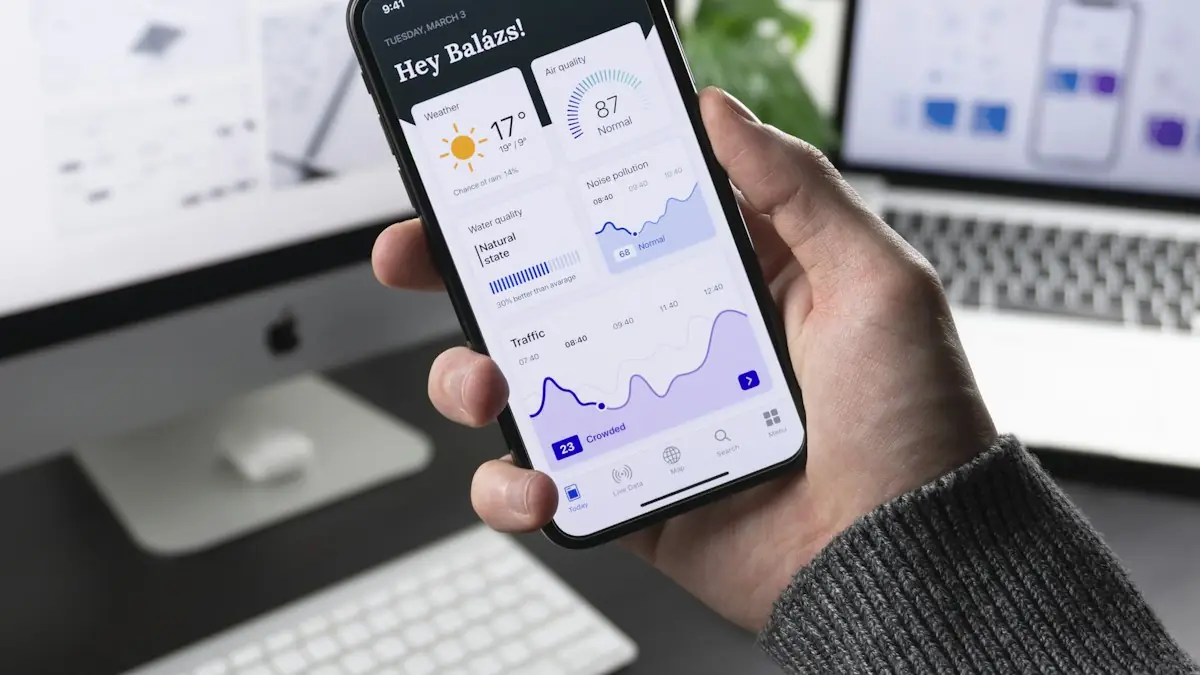
Each browser on each device keeps its own cookies. A phone browser and a laptop browser don't know they belong to the same person unless something connects them. Privacy features, ad blockers and in-app browsers inside social apps add more gaps.
The result is predictable: mobile ads look weaker than they are, and "direct" or "organic" sales look stronger.
Deterministic vs Probabilistic Matching
| Deterministic | Probabilistic | |
|---|---|---|
| How it links | A known identifier: login, email, account ID | Signals such as device type, OS, network and timing |
| Accuracy | Very high | Lower; can produce false matches |
| Reach | Only people who identify themselves | Broader, including anonymous visitors |
| Privacy burden | Uses personal data, so consent matters | Signal-based profiling raises its own concerns |
The big ad platforms have the advantage here, because billions of people stay logged into them on every device. Most advertisers rely on a mix: deterministic links where people identify themselves, plus whatever the platforms and their tracker can add.
What You Can Actually Do
- Capture an identifier earlyAn opt-in, quiz or account signup gives you an email you can use to link later visits, with consent.
- Use a first-party trackerOne that follows a visitor across sessions and joins devices when they identify themselves.
- Send conversions back with customer dataHashed email and phone help Meta and Google match a sale to the person who clicked. See our Conversions API guide.
- Tag every linkSo the first click carries its source, whatever device follows. Use UTM parameters.
- Read reports with the gap in mindExpect some sales to stay unlinked; compare trends, not single days.
An Example
Because the visitor gave an email on the phone, the laptop visit can be linked when they click through from that email. The Instagram ad gets credit for starting the sale instead of the email taking it all.
Privacy Still Applies

Linking devices uses personal data, so be clear in your privacy policy, follow consent rules where your audience requires them, and hash personal data before sending it to ad platforms.
Cross-Device Tracking in ClickMagick
ClickMagick says TrueTracking tracks across devices automatically, joining a visitor's sessions so the click that started the journey still gets its credit. Combined with its multi-touch models, that gives a fuller picture of what your mobile ads are worth. See how TrueTracking works.
Stop losing credit when buyers switch devices.
Try ClickMagick FreeFrequently Asked Questions
What is cross-device tracking?
Cross-device tracking links the visits one person makes on different devices, such as a phone and a laptop, so their journey can be measured as one path rather than several strangers.
What's the difference between deterministic and probabilistic matching?
Deterministic matching uses a known identifier like a login or email address, so it's very accurate but only works when people identify themselves. Probabilistic matching estimates links from signals like device type, network and timing, giving more reach but less certainty.
Why do ad platforms miss cross-device sales?
If someone clicks an ad on their phone and buys later on a laptop, a browser-based pixel may see the sale but not the click. Without a shared identifier, the two visits look like different people.
How can a small business improve cross-device tracking?
Capture an email or phone number early with consent, such as at an opt-in, and use a first-party tracker that links visits when a visitor identifies themselves on another device.
Does ClickMagick track across devices?
ClickMagick says its TrueTracking tracks across devices automatically, linking a visitor's sessions so a phone ad click can be credited for a later laptop purchase.